

Resumen rápido
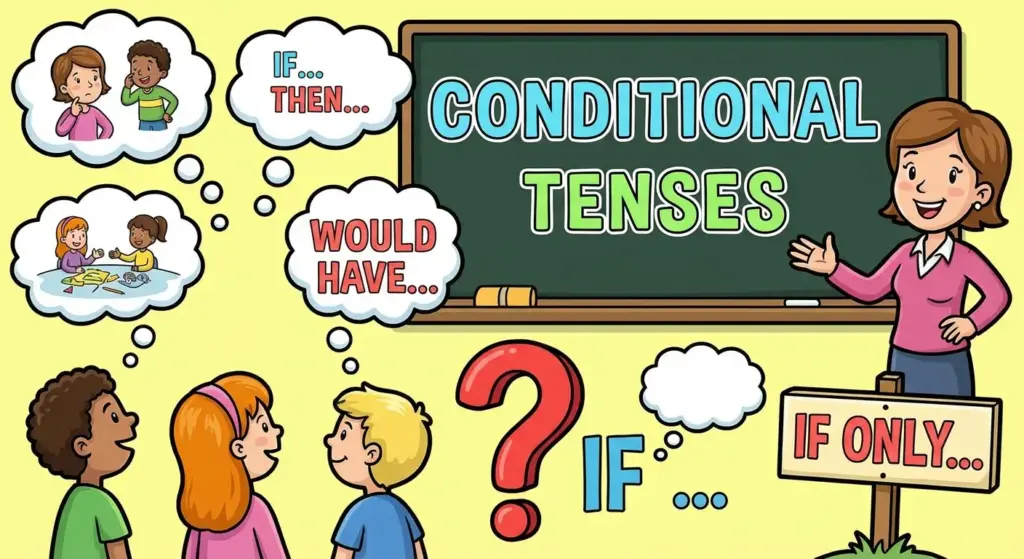
- Second Conditional (Presente irreal): Se usa para situaciones hipotéticas o improbables en el presente o futuro : If + past simple, would + base verb
- Third Conditional (Pasado irreal): Se usa para situaciones imposibles en el pasado, expresando arrepentimiento o imaginando resultados diferentes : If + past perfect, would have + past participle
- Práctica esencial: Estos condicionales requieren dominio de las formas verbales y comprensión de cuándo usar cada tipo según la referencia temporal
Ejercicio práctico
Pon a prueba tu dominio de los condicionales segundo y tercero. Elige la forma verbal correcta para cada oración.
Pregunta 1: If she _______ more confident, she would apply for the management position.
Pregunta 2: If they _______ to the meeting, they would have heard the announcement.
Pregunta 3: I _______ that book if I were you. It’s really interesting.
Pregunta 4: If we hadn’t missed the train, we _______ late for the wedding.
Pregunta 5: Life _______ much easier if everyone spoke the same language.
Pregunta 6: If he _______ so much last night, he wouldn’t have a headache now.
Pregunta 7: If I _______ enough money, I would buy that car immediately.
Pregunta 8: She _______ the promotion if she had applied for it.
Pregunta 9: If the weather _______ better, we could go to the beach this weekend.
Pregunta 10: If you had told me earlier, I _______ you with the preparations.
Pregunta 11: Unless you _______ harder, you won’t achieve your goals.
Pregunta 12: If I _______ more organized, I wouldn’t have forgotten your birthday last week.
Pregunta 13: They _______ the house if the price had been lower.
Pregunta 14: If we _______ a car, we could drive to the countryside every weekend.
Pregunta 15: If she _______ the instructions carefully, she wouldn’t have made so many mistakes.
Pregunta 16: What _______ if you won a million dollars tomorrow?
Pregunta 17: If it _______ so much, the farmers would have had a better harvest.
Pregunta 18: I _______ to the party if I didn’t have to work late.
Pregunta 19: If they _______ the warning signs, the accident could have been avoided.
Pregunta 20: If I _______ better at math, I would have studied engineering at university.
Tu puntuación
Reglas gramaticales y explicaciones
Comprender los condicionales irreales es esencial para expresar situaciones hipotéticas, arrepentimientos y escenarios imaginarios en inglés.
Second Conditional: Presente o futuro irreal
El second conditional describe situaciones hipotéticas en el presente o futuro que son improbables, imposibles o imaginarias.
Estructura: If + past simple, would + base verb
Ejemplo: If I had a million dollars, I would travel the world.
Realidad: I don’t have a million dollars, so I’m not traveling the world.
Usos comunes:
- Situaciones imaginarias presentes: If I were taller, I could reach the top shelf.
- Eventos futuros improbables: If she won the lottery, she would quit her job.
- Dar consejos (con «If I were you»): If I were you, I would apologize immediately.
- Peticiones o sugerencias educadas: It would be helpful if you could send that report today.
Puntos clave:
- Use «were» (no «was») para todas las personas con el verbo «to be» en inglés formal
- El past simple no se refiere al tiempo pasado—señala irrealidad
- Los verbos modales pueden reemplazar «would»: could, might, should
- Nunca use «would» en la cláusula if
Third Conditional: Pasado irreal
El third conditional describe situaciones hipotéticas en el pasado que no sucedieron. Expresa arrepentimiento, crítica o imagina resultados diferentes.
Estructura: If + past perfect, would have + past participle
Ejemplo: If I had studied harder, I would have passed the exam.
Realidad: I didn’t study hard, so I didn’t pass the exam.
Usos comunes:
- Expresar arrepentimiento: If I had known, I would have acted differently.
- Criticar acciones pasadas: If he had listened to me, this wouldn’t have happened.
- Imaginar resultados diferentes: If we had left earlier, we would have caught the train.
- Especular sobre eventos pasados: If she had been there, she would have helped us.
Puntos clave:
- Ambas cláusulas se refieren al tiempo pasado que nunca sucedió realmente
- Los verbos modales pueden reemplazar «would have»: could have, might have, should have
- Nunca use «would have» en la cláusula if (error común)
- El past perfect muestra la acción anterior que no sucedió
Condicionales mixtos
Los condicionales mixtos combinan elementos de second y third conditional cuando las referencias temporales difieren entre las cláusulas.
Tipo 1: Condición pasada, resultado presente
If I had taken that job, I would be living in Paris now.
(Past perfect + would + base verb)
Tipo 2: Condición presente, resultado pasado
If I were more organized, I wouldn’t have missed the deadline.
(Past simple + wouldn’t have + past participle)
Errores comunes a evitar
- Usar «would» en la cláusula if: ✗ If I would have known → ✓ If I had known
- Mezclar tiempos incorrectamente: ✗ If I studied, I would have passed → ✓ If I had studied, I would have passed
- Usar «was» en lugar de «were»: ✗ If I was you → ✓ If I were you (formal)
- Olvidar «have»: ✗ If I had known, I would told you → ✓ I would have told you
- Doble past perfect: ✗ If I had had known → ✓ If I had known
Tabla de referencia rápida
Second Conditional (Presente/Futuro irreal)
- Cláusula If: past simple (were, had, went, etc.)
- Cláusula principal: would/could/might + base verb
- Ejemplo: If I knew the answer, I would tell you.
Third Conditional (Pasado irreal)
- Cláusula If: past perfect (had been, had gone, had known, etc.)
- Cláusula principal: would/could/might + have + past participle
- Ejemplo: If I had known, I would have told you.
Condicional mixto (Tipo 1)
- Cláusula If: past perfect
- Cláusula principal: would + base verb
- Ejemplo: If I had saved money, I would be rich now.
Condicional mixto (Tipo 2)
- Cláusula If: past simple
- Cláusula principal: would have + past participle
- Ejemplo: If I were smarter, I wouldn’t have made that mistake.
Consejos de práctica para el dominio
- Identifique primero la referencia temporal: presente/futuro o pasado
- Recuerde: nunca use «would» en la cláusula if
- Practique regularmente las formas positivas y negativas
- Preste atención a los condicionales mixtos donde el tiempo difiere
- Cree ejemplos personales para reforzar los patrones
- Escuche a hablantes nativos usando estas estructuras
- Revise los errores y comprenda por qué funciona la respuesta correcta