


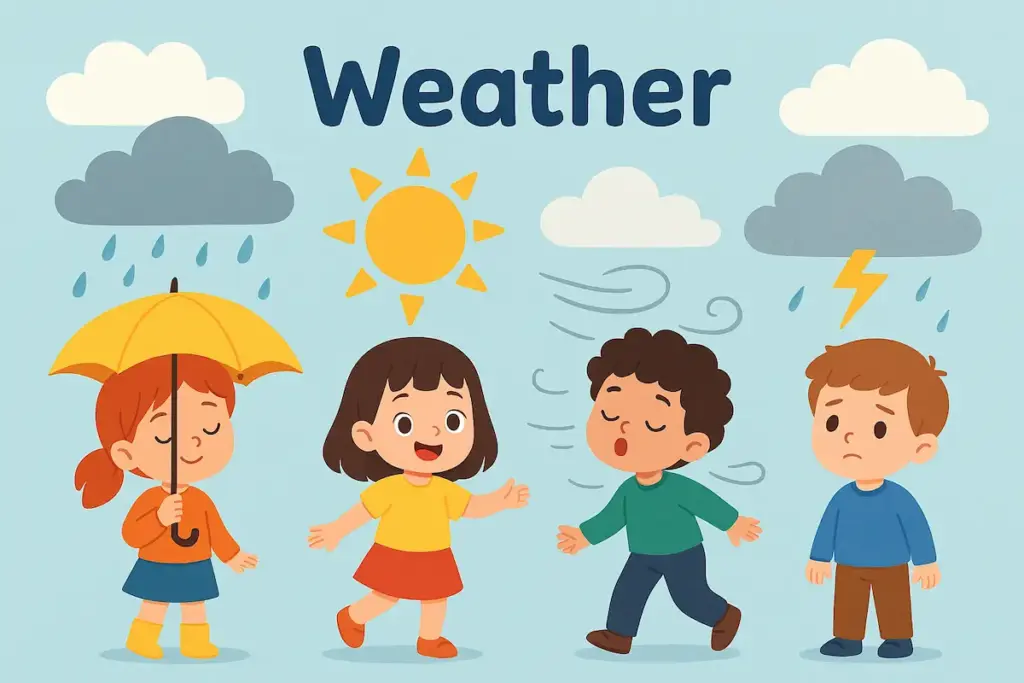
A menudo hablamos del clima para romper el hielo con una nueva persona. Conocer el vocabulario del clima en inglés es, por lo tanto, una buena manera de abordar a alguien que no conoces cuando estás de viaje en el extranjero.
El vocabulario básico del clima
Fenómenos meteorológicos
| Español | Inglés | Ejemplo |
|---|---|---|
| Sol | Sun | The sun is shining brightly. |
| Nube | Cloud | The sky is full of clouds. |
| Lluvia | Rain | It’s raining cats and dogs. |
| Nieve | Snow | The snow is falling heavily. |
| Viento | Wind | The wind is blowing strongly. |
| Tormenta | Storm | There was a terrible storm. |
| Tormenta eléctrica | Thunderstorm | A thunderstorm occurred last night. |
| Niebla | Fog | There is a thick fog outside. |
| Arcoíris | Rainbow | A rainbow appeared after the rain. |
| Granizo | Hail | It hailed yesterday afternoon. |
Temperaturas y condiciones
| Español | Inglés | Ejemplo |
|---|---|---|
| Caliente | Hot | It’s hot today. |
| Frío | Cold | It’s cold outside. |
| Helado | Freezing | The temperature is freezing. |
| Cálido | Warm | It’s a warm day. |
| Húmedo | Humid | It’s very humid. |
| Seco | Dry | The air is dry. |
Describir el tiempo
Hacer la pregunta
¿Cómo preguntar sobre el tiempo?
- How’s the weather? = ¿Qué tiempo hace?
- What’s the weather like today? = ¿Qué tiempo hace hoy?
- Is it sunny/rainy/cloudy outside? = ¿Está soleado/lluvioso/nublado afuera?
- What’s the temperature? = ¿Cuál es la temperatura?
Describir el tiempo con «It’s…»
Consejo: Para describir el tiempo en inglés, a menudo se añade la terminación -y al sustantivo. Por ejemplo: cloud (nube) se convierte en cloudy (nublado).
- It’s sunny = Hace sol
- It’s cloudy = Está nublado
- It’s rainy = Está lloviendo
- It’s snowy = Está nevando
- It’s windy = Hace viento
- It’s foggy = Hay niebla
Expresiones idiomáticas
- It’s raining cats and dogs. = Está lloviendo a cántaros.
- Break the ice. = Romper el hielo.
- Be on cloud nine. = Estar en el séptimo cielo.
- I feel as right as rain. = Me siento en plena forma.
- I’m snowed under. = Estoy desbordado.
- A storm in a teacup. = Una tormenta en un vaso de agua.
- Every cloud has a silver lining. = No hay mal que por bien no venga.
- Come rain or shine. = Pase lo que pase.
Ejercicio práctico
Pon a prueba tus conocimientos con este cuestionario:
Conclusión
Ahora conoces el vocabulario completo para hablar del clima en inglés. Practica describiendo el tiempo que hace cada día. Cuanto más practiques, más fácil será.
La próxima vez que conozcas a un angloparlante, podrás comenzar la conversación preguntándole: «How’s the weather today?»
Good luck and enjoy learning English! 🌈