



Cooking and eating make up a large portion of our everyday lives. Whether you are dining out in London, taking a cooking class in Bangkok or inviting a foreign friend over for a home-cooked meal, vocabulary and idioms related to cooking are vital to have in your repertoire. Let’s go through the steps of preparing a meal from scratch together and pick up some useful cooking vocabulary and expressions along the way.
It all starts with the ingredients
When preparing a meal, the first step is to choose the ingredients (foods or substances that are combined to make a dish) that we will use. These will come from the food groups of vegetables (such as carrots and broccoli), fruit (such as apples and berries), protein (such as meat, fish, eggs or tofu), dairy (such as cheese and milk) grains (such as rice and pasta) and legumes (such as beans, lentils and chickpeas). In addition to these food items, we also need to include some herbs or spices to season the dish and give it ample flavour. Herbs include basil, thyme and parsley while spices include curry powder, chillies and cumin.
Depending on the cuisine (style of cooking from a particular country) that your chosen dish comes from, you might need to source specific ingredients. For example, Indian cuisine tends to incorporate more dried spices like turmeric, while Chinese cuisine often uses condiments (substances to add flavour) like soy sauce and sesame oil.
Preparing the food
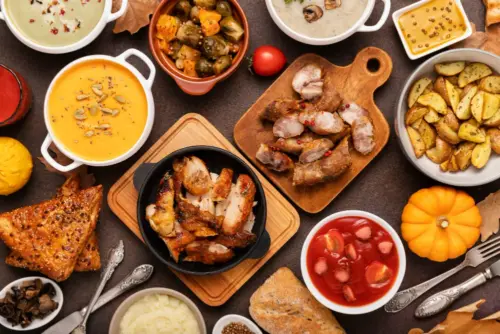
Once we have gathered our ingredients, we begin manipulating them to make them easier to cook or more pleasant to eat. These preparations include peeling (removing the skin with a peeler), cutting (slicing into pieces with a knife), grating (shredding into pieces using a grater) or soaking (submerging in water for a length of time). We might also need to mix (combine using a spoon or whisk) certain ingredients together – particularly when making sauces or dressings, or mash (press into a soft mass) and blend (mix at a high speed in an electric blender) ingredients so that they become softer and smoother in texture.
If we are following a recipe (step by step guide of how to make a dish), it will indicate the amounts of each ingredient to use, as well as the entire preparation and cooking method. It should also give the number of servings (quantity of food suitable for one person) that the recipe will make so that you can ensure you have enough food for the amount of people that you are cooking for.
Cooking methods
Now comes the fun part – the cooking! There are various ways that we can cook our ingredients, which all involve applying heat to the food to take them from a raw (uncooked) state into a cooked state. Some methods require oil (such as olive oil, sunflower oil or vegetable oil), and some just water.
The oil-based methods are frying/sauteing (heating a small amount of oil in a pan on the stove and cooking the ingredients in the oil, moving them around in the pan until the heat has penetrated the food fully), deep frying (heating a large amount of oil in a pan and submerging the food in the hot oil until fully cooked) and roasting (laying the ingredients on a baking tray in the oven with some oil and heating until it is fully cooked).
The healthier, oil-free cooking methods are boiling (submerging the ingredients in rapidly boiling water until cooked) and steaming (placing the ingredients on a tray with holes that rests above a pot of boiling water, allowing the steam to rise and cook the food).
Tastes and textures
Although it is possible (and sometimes preferable) to eat some foods raw, cooking changes the tastes (flavours) and textures (consistency and feeling) of food in an exciting way. Certain foods have a naturally sweet (sugary) or salty (savoury) flavour, which can be enhanced when adding heat or combining with additional ingredients. Other ingredients may be naturally sour (acidic like lemon and vinegar) or bitter (sharp or pungent in taste, like alcohol) and can be more pleasant to eat when paired with sweet or salty ingredients.
These intense flavours can also balance each other out beautifully when mixed in the right proportions, giving an even more delicious taste to a dish when combined.
Examples of these tasty flavour combinations are certainly present in Thai cuisine, where a balance of sweet, salty, sour and spicy (hot from chili) is achieved.
Applying heat through different cooking methods also changes the texture of food in a tantalising way. Frying and roasting can make food crispy and crunchy (firm, dry and brittle like fried chicken or potato chips) while boiling and steaming can make food soft, creamy and smooth (like macaroni and cheese pasta). This variety in tastes and textures is what makes a well-cooked meal so delicious and enjoyable to eat.
Idioms related to cooking
Now that we know lots of vocabulary related to the cooking process, let’s go over a few idioms which use cooking scenarios to illustrate a wider meaning:
Here are cooking and food-related idioms with colorful examples:
“Too many cooks spoil the broth” – When too many people try to manage something, it often turns out poorly. The wedding planning turned into a disaster when the bride, her mother, two sisters, and three best friends all tried to organize the flowers. They ended up with clashing colors and wilted arrangements because too many cooks spoiled the broth.
“If you can’t stand the heat, get out of the kitchen” – If you can’t handle pressure or criticism, you should leave the situation. When Jake complained about his boss’s demanding deadlines and constant feedback during the product launch, his colleague told him, “If you can’t stand the heat, get out of the kitchen – this is what working in tech is like.”
“A watched pot never boils” – Time seems to move slowly when you’re waiting for something to happen. Sarah kept refreshing her email every five minutes waiting for the job interview results. Her roommate laughed and said, “You know a watched pot never boils – go binge a TV show and the response will come when it comes.”
“The proof is in the pudding” – The real test of something’s quality or success is in the results, not the theory. The startup CEO gave an impressive presentation about their revolutionary app, but investors said, “The proof is in the pudding – show us actual user engagement numbers and revenue before we write any checks.”
“Don’t cry over spilled milk” – Don’t waste time being upset about something that’s already happened and can’t be changed. After Maria accidentally deleted three hours of work, she spent twenty minutes lamenting her mistake. Her coworker gently reminded her, “Don’t cry over spilled milk – let’s just recreate what we can remember and move forward.”
“Easy as pie” – Something that’s very simple to do. When his nervous nephew asked about parallel parking, Uncle Tom grinned and said, “Once you get the hang of it, parallel parking is as easy as pie – just three simple steps and you’re golden.”
“Have your cake and eat it too” – Wanting to enjoy the benefits of two conflicting things simultaneously. Tom wanted to travel the world for six months but also get promoted at his demanding law firm. His mentor shook her head, “You can’t have your cake and eat it too – choose adventure or advancement for now.”
“A piece of cake” – Something very easy to accomplish. When her friend worried about the upcoming driver’s test, Lisa reassured her, “I passed on my first try last month – it’s a piece of cake if you just remember to check your mirrors and signal properly.”
“In a pickle” – In a difficult or troublesome situation. Robert was really in a pickle when he promised to attend both his daughter’s recital and his best friend’s bachelor party on the same Saturday evening, and both events meant the world to the people involved.
“Spill the beans” – To reveal a secret or give away information. Everyone kept the surprise party secret for weeks until little Emma accidentally spilled the beans by asking Grandpa what time he wanted his “birthday surprise” to start.
“Full of beans” – Full of energy and enthusiasm. Despite working a twelve-hour shift, nurse Patricia was still full of beans when she got home, dancing around the kitchen while making dinner and planning her weekend hiking trip.
“Butter someone up” – To flatter someone, usually to get something from them. Kevin spent ten minutes complimenting his sister’s new haircut and praising her cooking skills before finally asking, “So… could I possibly borrow your car this weekend?” She rolled her eyes, “Nice try buttering me up, but the answer is still no.”
“Bring home the bacon” – To earn money for the family. After his wife decided to stay home with their newborn twins, Marcus felt the pressure to bring home the bacon and started working overtime shifts at the construction site.
“Everything’s peachy” – Everything is going well or is satisfactory. When asked how her first week at the new job was going, Diana smiled and said, “Everything’s peachy – great co-workers, interesting projects, and they even have a coffee machine that makes perfect lattes.”
So there you have it! We hope our cooking vocabulary and expressions article will help you feel more at ease in the kitchen while preparing your favorite recipes.

This article was written by Break Into English’s online teacher and blog contributor Kirstyn Liang.
Follow us on Social Media