


If you’re applying for an English-speaking job, writing your CV in English for the first time can be a daunting experience. Knowing your CV will be compared to native English speakers can easily leave you overwhelmed and wondering how you’ll ever achieve success. However, with just a few tweaks and adjustments, you can prepare a CV that fits perfectly with the expectations of local employers and the culture of English-speaking countries. Let’s take a look at the top tips for transforming the structure and style of your CV for an English language job application.
Top 14 tips for CV success in English-speaking countries
Follow these top tips when writing your CV, to impress recruiters and hiring managers in English-speaking countries :
1. Use a traditional, reverse-chronological format

Whether you’re applying for a job in the UK, US or another English-speaking country, the most widely used CV structure is the traditional, reverse-chronological CV format. Professional experience is the main focus of this CV structure, so make sure your work experience section is the focal point of your CV, and list relevant previous roles in reverse-chronological order, starting with your current or most recent role.
2. Use standard, recognized CV headings
Appropriate CV headings will not only help your CV fit with employer expectations, it will also optimize it for ATS screening. The following section headings are standard for English language CVs:
-
- CV Summary/CV Objective/Professional Summary
-
- Work experience
-
- Education
-
- Skills
-
- Certifications/Certifications and Licenses
-
- Additional Information
-
- Voluntary Work
-
- Hobbies and Interests
3. Avoid Europass CV for UK applications
Although the Europass CV can be a useful way of preparing a standardized CV for job applications in Europe, this format isn’t widely used in the UK. Sending a CV in a Europass format for UK jobs can make your application appear too formal, lacking the tailoring and personalization employers tend to look for.
4. Keep your CV concise
While employers in some countries and regions prefer longer CVs, the preference of employers in most English-speaking countries is for short, concise CVs and resumes. Keep your CV to the following length for these English-speaking countries:
-
- USA: 1 page (letter format)
-
- Canada: 1-2 pages (letter format)
-
- UK: 2 pages (A4 format)
-
- Ireland: 2 pages (A4)
-
- Australia: 2-3 pages (A4)
-
- New Zealand: 2-3 pages (A4)
-
- South Africa: 2 pages (A4)
-
- Caribbean countries: 1-2 pages (A4)
5. Start each bullet point with an action word
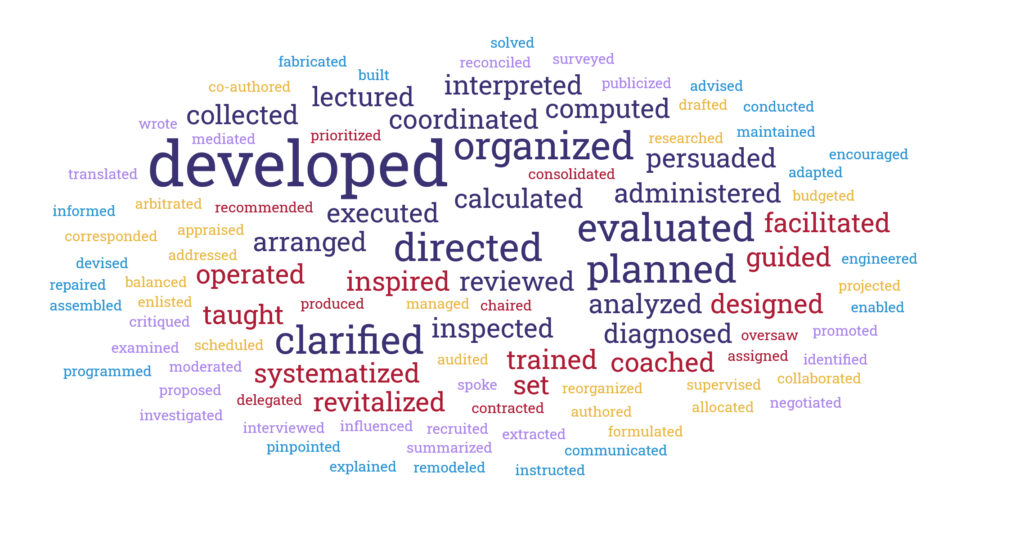
The best way to write a concise, impactful CV for English job opportunities is to use bullet points throughout. Starting each bullet point in your work experience section with a strong action verb shows the reader how you put your key skills and qualities to good use in previous jobs. This helps to keep this section concise, relevant and focused on your skills and the value they added for previous employers.
6. Use professional language
Professional or business English can be quite different to conversational English, and there are likely to be various industry terms and specialist phrases you’ll need to learn, whatever sector or role you’re applying for. If in doubt, it’s a great idea to ask a native English-speaking professional in your chosen field to review your CV and check it fits with the style of language recruiters and employers will expect.
7. Convert qualifications to UK equivalents
If your qualifications or licenses are country-specific and differ from those in the country you’re applying to work in, it’s best to either convert them into language the reader is likely to understand. Alternatively, offer an explanation of which equivalent qualification it matches with locally. It’s important for the recruiter to easily understand you’re qualified and eligible for the role.
8. Avoid personal information
While in some countries, it’s standard practice to include personal information on your CV, such as your age, gender, marital status and nationality, this is best avoided on an English CV. Anti-discrimination laws in the UK, US, Canada and other English-speaking countries make it illegal to discriminate based on various protected characteristics. In the UK, this includes age, sex, disability, race, marital status, gender reassignment, pregnancy, religion and sexual orientation.
Adding any of these to your CV could jeopardize your chances of progressing through the recruitment process, or even discount you from the running. As such, it’s best to leave these off your CV and opt for the minimum basic information, including your name, location and contact details.
9. Don’t translate your CV word-for-word
Attempting to translate your CV word-for-word from your native language, or feeding it through a translation app, is likely to result in a muddled, awkward document that jars with a native English reader. It’s important to consider the nuances of the English language and particularly the communication style of your role or industry, and write your CV accordingly. It can take time and effort to understand the nuances of English in a professional setting, but getting this right can really help your CV to appear natural and readable to recruiters and employers.
10. Use a suitable CV title

For English language CVs, it’s not necessary to write ‘Curriculum Vitae’, ‘Resume’ or ‘CV’ as your CV title. In your CV header, simply add your name in a bold, larger font that stands out from the rest of the document. You could also add a CV title or a CV headline that provides some key information to the reader, such as your job title or a very brief summary of your unique skills and qualities (for example, ‘Experienced project manager’ or ‘Dynamic project manager with extensive experience of process optimization’).
11. Keep it relevant
One of the keys to a concise, impactful CV for English jobs is to keep the content of your CV as relevant as possible. Employers will be expecting your CV to provide a short summary of your career, skills and qualifications, and anything beyond that is typically unnecessary. If you wish to elaborate on any details of your career, your cover letter provides a little more space to provide further information. However, when it comes to your CV, keep it concise and relevant to the job description.
12. Don’t include a photo
You can treat a personal photo in the same way you would other personal details on your English CV. That means it’s best to omit a personal photo, unless the job requires one or the job advertisement requests one. Standard practice in most English-speaking countries is to not include a photo on your CV, which reflects the anti-discrimination legislation in place.
13. Use keywords that reflect the job description
One of the best ways to make your English CV as relevant as possible to the role is to study the job description and write your CV so it reflects the language included in it. This increases the chances of your CV passing the ATS screening stage and makes it more likely to resonate with the employer. It’s also a useful way, if you’re unsure or nervous about writing a CV in English, to ensure you’re writing it in appropriate, culturally relevant language.
14. Proofread your CV closely
Finally, before you send your English CV, proofread it closely to ensure there are no errors in grammar or spelling. If you have an English teacher, you may also wish to share your CV for them to review before you send it. This extra care and attention can make all the difference in ensuring your job application meets the required standard and expectations of English-speaking employers.
Key learnings to take your English CV to the next level
When it comes to writing a strong English language CV, practice definitely makes perfect. The more applications you send, the better and more refined your English CV will become, so don’t be disheartened if you don’t achieve instant success. Pay attention to the local CV customs and the industry culture, and make sure your CV format and language reflects these.
Always remember to keep your CV concise and relevant, and use the job description as a guide for what to include, and which keywords to focus on. With care and attention, your English CV will make the grade and place you in a strong position for English-speaking roles.