


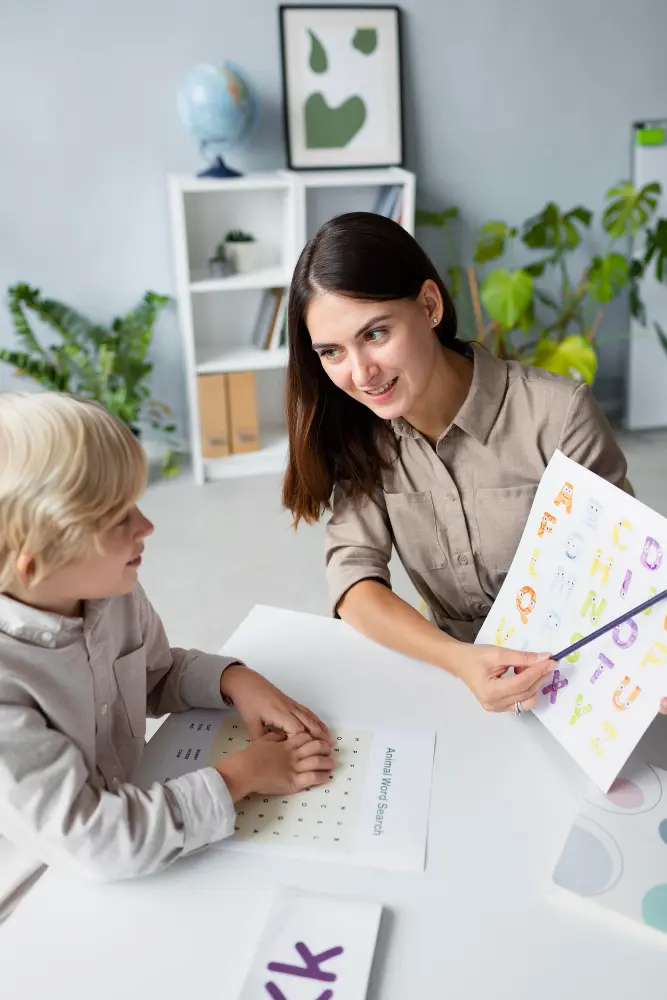
Learning English vocabulary represents the foundation of all linguistic mastery in children. Contrary to popular belief, it’s not necessary to wait until elementary school to begin this exciting adventure. From age 3, your child possesses an extraordinary absorption capacity that allows them to naturally acquire new English words. The secret lies in the playful and nurturing approach you’re going to adopt. Rather than turning learning into a chore, these 15 proven methods will allow you to create enriching moments of complicity with your child. Each technique has been tested by thousands of families and adapts perfectly to children’s natural learning rhythm. You’ll discover how to transform your daily routine into a linguistic playground, from colorful flashcards to catchy songs, including interactive applications. The goal isn’t immediate perfection, but the progressive construction of solid vocabulary that will accompany your child throughout their schooling. These methods respect different children’s personalities: whether they’re more visual, auditory, or kinesthetic, you’ll definitely find the approach that suits them. Prepare to see their eyes light up when they manage to say “I can see a red apple” or “Where is my teddy bear?”.
1. Establish a daily vocabulary routine
Regularity constitutes the pillar of all successful learning in children. A vocabulary routine of 10 to 15 minutes per day proves infinitely more effective than an intensive one-hour weekly session. Your child’s brain needs this gentle and constant repetition to durably anchor new English words. Choose a privileged moment in your day: after snack time, before bath time, or just before bedtime stories. The important thing is that this moment becomes an anticipated appointment, never a constraint. Begin by joyfully announcing “It’s English time!” to create a positive transition to this special activity. For 3-6 year-olds, favor sessions of 10 minutes maximum with a single activity: review 5 words with images, sing a nursery rhyme, or play “Where is…?”. 6-10 year-olds can handle 15 minutes with two complementary activities, like reviewing vocabulary then reading a short illustrated story. A valuable tip: always end on a success. If your child struggles with a difficult word, return to a word they already master so they finish proud of themselves. This nurturing routine will create a lasting positive association with English learning, transforming each session into a moment of shared pleasure.
2. Take online English classes with a teacher
Personalized support from a native teacher represents a tremendous accelerator for enriching your child’s vocabulary. Unlike self-taught methods, online classes for kids offer authentic interaction and immediate corrections that durably anchor learning. The great advantage lies in adapting content to your child’s specific level and interests. An experienced teacher will know how to identify vocabulary gaps and propose targeted exercises. They’ll also transform learning into natural conversation: “What’s your favorite animal?” or “Can you describe your bedroom?”. To maximize benefits, choose classes of 30 minutes maximum for younger children, and prepare some words learned at home to proudly show the teacher. This pride in sharing their knowledge enormously motivates children and reinforces their confidence. Platforms like Break Into English offer teachers specially trained in child pedagogy, guaranteeing a playful and nurturing approach. The investment is well worth it: your child will develop not only their vocabulary, but also their pronunciation and speaking confidence.
3. Learn by word families
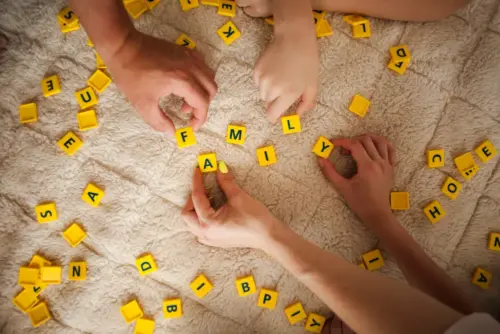
Grouping vocabulary by themes considerably facilitates memorization and allows your child to create logical links between words. This natural approach mimics how our brain spontaneously organizes information. Start with daily themes that fascinate children. Animals always achieve great success: “cat, dog, bird, fish” form a perfect first family. Then explore colors: “red, blue, yellow, green” that you can immediately associate with surrounding objects. Here are the essential word families to master:
-
- Colors in English: indispensable visual foundation
-
- Animals in English: motivating and varied vocabulary
-
- Body parts in English: useful for tactile games
-
- Family in English: close to the child’s experience
-
- Numbers in English: foundation for future mathematics
-
- Food in English: everyday vocabulary
-
- Clothes in English: practical for getting dressed This method allows easy review: “Today, we learn animals!” and creates captivating stories mixing several word families. Your child will naturally progress from one family to another.
4. Use flashcards and card games
Flashcards remain the most effective tool for visually anchoring vocabulary in children’s memory. This proven method transforms learning into an interactive game where your child becomes the actor of their discoveries. Make your cards with your child: on one side the colorful image, on the other the English word in large letters. This shared creation already reinforces memorization. Favor simple and expressive images: an orange cat rather than a sophisticated feline, a bright red apple rather than a dull fruit. The Memory game works wonderfully: spread out 10 cards face down and ask “Where is the apple?”. When your child finds the right card, congratulate them warmly: “Yes! Perfect! This is an apple!”. To add to the fun, add the “Who am I?” game: describe the animal without naming it and let your child guess. A dynamic variant consists of scattering cards on the floor and shouting “Touch the cat!” or “Jump to the blue car!”. This kinesthetic approach perfectly suits children who need to move to learn. The movement-vocabulary association creates lasting and joyful memories.
5. Play dynamic vocabulary games
Movement games transform vocabulary learning into a captivating physical adventure. This kinesthetic approach perfectly suits children who learn better by moving and allows them to release their energy while enriching their knowledge. “Simon Says” adapted to vocabulary remains the great classic: “Simon says touch your nose!” or “Simon says jump like a rabbit!”. This game simultaneously develops oral comprehension and word-action association. For younger children, simplify with “Touch the red book” or “Show me your hands”. Thematic hide-and-seek works wonderfully: hide colorful objects in the room and guide your child with “Look under the table” or “Check behind the chair”. Once the object is found, they must name it: “I found the yellow ball!”. This variant enriches spatial vocabulary while creating suspense. The magic bag game adds a fascinating tactile dimension. Place different objects in an opaque bag and ask: “Can you find the apple?”. Your child explores blindly while verbalizing: “Is it round? Is it soft?”. This method develops descriptive vocabulary and stimulates the senses, creating powerful memory associations.
6. Sing nursery rhymes to memorize words
Music represents an extraordinary vehicle for children’s vocabulary memorization. Melodies create privileged pathways in the brain, allowing easy retention of dozens of new words without apparent effort. Start with the great classics adapted to each age. “Twinkle, Twinkle, Little Star” to discover first words, “Old MacDonald Had a Farm” to enrich animal vocabulary, or “Head, Shoulders, Knees and Toes” to learn body parts while moving. The secret trick consists of accompanying singing with expressive gestures. Point to your eyes on “see”, touch your nose on “nose”, or imitate animals on “moo, moo here”. These gestural associations durably anchor vocabulary and transform learning into a joyful family show. To personalize the experience, invent verses with your child’s first name: “Emma has a red dress, red dress, red dress!”. This personalization enormously motivates and allows naturally introducing clothing or color vocabulary. Repeat favorite songs until they become automatic: your child will sing them spontaneously while playing.
7. Read stories and illustrated books
Shared reading of illustrated stories naturally develops vocabulary in a rich and emotionally engaging context. This method allows introducing complex words gently, carried by the magic of storytelling. Choose books adapted to your child’s level: simple images and short text for 3-6 year-olds, more elaborate stories for older children. “Brown Bear, Brown Bear, What Do You See?” remains essential for beginners, while “The Very Hungry Caterpillar” magnificently enriches food vocabulary. During reading, point to each image while clearly pronouncing the English word. Encourage your child to repeat and ask simple questions: “Where is the red bird?” or “How many apples can you see?”. This interaction maintains their attention and verifies their comprehension. A powerful technique consists of letting your child “tell” the story from images alone. They thus develop their oral expression by spontaneously reusing discovered vocabulary. Always end with their favorite passage: this pleasant repetition definitively anchors words in their memory while associating English with a moment of shared tenderness.
8. Watch cartoons in English
English cartoons naturally capture children’s attention while exposing them to rich and varied vocabulary. This gentle immersion method allows associating words with animated images, greatly facilitating comprehension and memorization. Start with short episodes of 10-15 minutes to maintain concentration. “Peppa Pig” excels for everyday vocabulary, “Bluey” for emotions and family relationships, while “Paw Patrol” enriches the lexical field of professions and vehicles. The important thing is choosing age-appropriate content with moderate speech pace. Activate English subtitles for children who can read: this double visual and auditory exposure reinforces learning. For younger children, watch together and comment: “Look! The dog is running!” or “What color is the car?”. These interactions maintain the educational aspect. Limit screen time to 20-30 minutes per session to preserve pedagogical effectiveness. After viewing, reactivate discovered vocabulary: “Do you remember what Peppa said?” or replay a scene together. This post-viewing exploitation transforms passive entertainment into active and memorable learning.
9. Label objects in the house
Transforming your home into an immersive learning environment represents a tremendously effective strategy. This daily exposure to English vocabulary creates automatic associations between words and familiar objects. Start with main rooms using colorful and readable labels. Stick “door” on the door, “window” on the window, “table” on the table. Use different colors by category: blue for furniture, green for objects, red for house parts. This visual organization facilitates memorization. Actively involve your child in this approach: “Can you help me put ‘chair’ on the chair?”. This participation reinforces their engagement and pride in contributing to the house’s transformation. Regularly change labels to maintain novelty and avoid visual habituation. Exploit these labels in your daily interactions: “Please bring me the book from the table” or “Put your shoes near the door”. This contextual use gives immediate meaning to learned vocabulary. After a few weeks, your child will naturally circulate in an English linguistic bath that will spontaneously enrich their expression.
10. Use an English-speaking babysitter

Immersion with an English-speaking babysitter offers natural and relaxed exposure to the English language. This approach reproduces spontaneous linguistic acquisition conditions, particularly effective in young children. Look for a benevolent and patient person, ideally with pedagogical experience. Accent matters less than the ability to communicate simply and encourage your child. Favor someone who likes to play and invent creative activities rather than an overly academic profile. Prepare the babysitter by providing them with a priority vocabulary list and your child’s favorite games. Suggest simple activities: “cooking together”, “playing with toys”, “reading stories”. This preparation guarantees optimal use of learning time. The major advantage lies in the playful and non-academic aspect of these exchanges. Your child naturally acquires vocabulary in real context: “Let’s make a sandwich” or “Time to tidy up the toys”. This regular exposure develops their confidence to communicate in English without the pressure of a formal educational framework. Learning becomes a natural and spontaneous game.
11. Play adapted board games
Board games transform vocabulary learning into a captivating family sharing moment. This approach to learning English through play simultaneously develops language and social skills, while creating positive memories associated with English. Adapt classics with English vocabulary: create a Memory with image-word pairs, a thematic Bingo about animals, or illustrated Dominoes. For “Snakes and Ladders”, replace numbers with images and ask your child to name the object to advance: “It’s a cat! Move three spaces!”. The “Dobble” game works particularly well: make cards with simple images and shout the English word as soon as you spot the common object. This execution speed develops linguistic reflexes and maintains excitement. “Snap!” adapts perfectly too: distribute cards and hit the pile shouting the word when two identical images appear. The moderate competitive aspect naturally motivates children without creating stress. Celebrate each success: “Well done! You said ‘elephant’ perfectly!” and transform errors into learning: “Almost! It’s a ‘tiger’, can you repeat?”. These game moments reinforce the desire to learn and create an enriching family dynamic around English.
12. Use vocabulary applications
Specialized applications offer interactive learning perfectly adapted to digital children. This educational technology proposes personalized pathways that automatically adjust to your child’s rhythm and level. For 3-6 year-olds, “Lingokids” excels with its endearing characters and varied activities. “Duolingo Kids” suits 6-10 year-olds thanks to its motivating gamified approach. Older children will appreciate “Fun English” for its diversified themes and progressive challenges. Test several applications to identify the one that best captivates your child. Limit screen time to 15-20 minutes per session to maintain effectiveness. Occasionally sit with your child to share their discoveries: “Show me what you learned today!” or “Can you teach me this new word?”. This parental involvement values their progress and reinforces their motivation. Exploit tracking functionalities to identify mastered words and those needing more practice. Reactivate learned vocabulary in real life: if the application teaches “butterfly”, look for butterflies in the garden together. This connection between virtual and real durably anchors digital learning.
13. Draw and color in English
Artistic activities create a powerful emotional link with learned vocabulary, favoring lasting and joyful memorization. This creative approach simultaneously stimulates artistic expression and linguistic acquisition. Propose directed coloring with English instructions: “Color the sun yellow” or “Make the grass green”. This vocal guidance naturally associates colors with objects while developing oral comprehension. Vary instructions: “Draw three red apples” or “Add blue stripes to the shirt”. Encourage commented free creations: while your child draws, name together what appears. “What are you drawing? A house! What color is the door?”. These spontaneous exchanges enrich descriptive vocabulary and develop natural oral expression. Create a family “Art Gallery” where you proudly display works with their English titles: “Emma’s Beautiful Garden” or “Tom’s Funny Monster”. This valorization enormously motivates and transforms each creation into permanent learning support. Your child will proudly explain their drawings to visitors, thus reinforcing their vocabulary and confidence to express themselves in English.
14. Apply spaced repetition
Spaced repetition intelligently exploits natural memory mechanisms to durably anchor English vocabulary. This scientifically proven technique optimizes review moments to effectively combat forgetting. Review new words according to a precise schedule: the same day, then 3 days later, a week later, and finally a month later. This progression respects the natural forgetting curve and progressively reinforces memorization. Create a small colorful calendar with your child to visualize this rhythm: “Today we review animals, tomorrow we learn colors!”. Transform these reviews into fun mini-challenges: “Can you remember the three animals we learned Monday?” or organize 5-minute “speed rounds” where your child rapidly names already-seen images. This playful approach maintains engagement without creating weariness. Use a family vocabulary notebook where you note learned words with their discovery date. Check off definitively mastered words together: this progress visualization enormously motivates your child. When they spontaneously reuse an old word in a new situation, celebrate this success that confirms the method’s effectiveness.
15. Use the C.C.A.R.E technique (emotions)
This holistic method transforms vocabulary learning into an emotionally rich and memorable experience. The C.C.A.R.E. acronym guides your approach to maximize the pedagogical impact of each interaction. Clarity: Distinctly pronounce each new word and use expressive gestures. “This is a BUTTERFLY” while mimicking beating wings marks more than simple repetition. Context: Always integrate vocabulary into concrete situations: “Look! A red car is driving down the street!” rather than isolating words. Action Learning: Encourage your child to move, touch, manipulate while learning. “Jump like a frog!” or “Pretend to eat the apple!” create lasting kinesthetic memories. Regularity: Maintain gentle but constant practice, even 5 daily minutes suffice. Emotions: Create positive associations by celebrating each progress and telling captivating stories around learned words. “Once upon a time, there was a magic blue elephant…” transforms vocabulary into personal adventure. This emotional dimension guarantees exceptional retention because your child associates English with moments of shared happiness.