

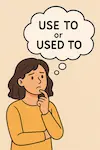
The rule is simple: use “used to” in 99% of cases, and “use to” only after “did/didn’t”. For example, you would say “I used to play piano” and “I’m used to the noise”, but “Didn’t you use to live here?” The incorrect forms to avoid are “I use to play piano”, “I’m use to the noise”, and “You used to live here?” when asking a question with “did”. Before continuing and to go further and perfectly master these grammatical nuances, consider the possibility of <a href=”https://breakintoenglish.com/general-english-classes-online/”>taking a general English course</a> with a qualified teacher.
The 3 Main Use Cases
1. Past Habits
This construction expresses something you did regularly in the past but no longer do now. It’s one of the most common ways English speakers talk about discontinued routines or behaviors from earlier periods of their lives.
“When I was young, I used to collect stamps.” (When I was young, I collected stamps.)
The beauty of “used to” for past habits is that it immediately signals to your listener that this activity is firmly in the past. Unlike simple past tense, which might just describe a single event, “used to” specifically indicates a repeated pattern that has since ended.
2. Being Accustomed To
This usage means you’ve adapted to something and it has become normal or familiar to you. It describes a state of comfort or familiarity that develops over time through exposure or experience.
“After 3 months in London, I’m finally used to the weather.” (After 3 months in London, I’ve finally adapted to the weather.)
This construction often appears with “get” or “become” to show the process of adaptation: “I’m getting used to my new job” or “She became used to the city noise.” It emphasizes the gradual nature of becoming comfortable with new situations.
3. Questions and Negations with “Did”
Here’s where many English learners stumble. When you use “did” or “didn’t” in questions and negative sentences, you must use “use to” without the ‘d’. This follows the same grammatical rule as other verbs after “did.”
“Did you use to smoke?” (Did you smoke before?)
Think of it this way: “did” already carries the past tense marker, so the main verb “use” doesn’t need the past tense ending. Just as you say “Did you go?” not “Did you went?”, you say “Did you use to?” not “Did you used to?”
Tips to Never Make This Mistake Again
Tip 1: The “Be” Test
If you can add “be” in front of the phrase, use “used to.” This works because “be used to” is a common and correct construction meaning “be accustomed to.”
- “I am used to it” (correct)
- “I am use to it” (incorrect)
This test helps you identify when you’re talking about being accustomed to something, which always requires “used to” with the ‘d’.
Tip 2: The “Did” Test
With “did” or “didn’t”, remove the ‘d’ from “used.” Remember that auxiliary verbs like “did” carry the tense information, so the main verb appears in its base form.
- “Did you use to…?” (correct)
- “Did you used to…?” (incorrect)
This follows standard English grammar patterns and becomes automatic with practice.
Why This Confusion Exists
The confusion between “used to” and “use to” stems from pronunciation. In spoken English, both phrases sound identical! The ‘d’ in “used” blends seamlessly with the ‘t’ in “to,” creating a single sound that masks the spelling difference.
This phonetic similarity means that many native speakers, despite using these constructions correctly in speech, sometimes hesitate when writing them down. The same phenomenon occurs with “supposed to,” which people often incorrectly write as “suppose to.”
Understanding this pronunciation pattern helps explain why the confusion is so widespread and why you shouldn’t feel discouraged if you’ve made this mistake before.
Exercise “Used To” vs “Use To”
Choose the correct form: “used to” or “use to”. Write your answer in the text box.
Key Takeaways
Remember these essential points and you'll master this grammar rule completely. "Used to" serves as your default choice for expressing past habits and states of being accustomed to something. It's the form you'll use in the vast majority of situations.
"Use to" appears only in the specific context of questions and negations formed with "did" or "didn't." This restriction makes it the exception rather than the rule, which is why "used to" covers 99% of cases.
The identical pronunciation of both forms explains the widespread confusion, but understanding the grammatical principles behind each usage will give you confidence in your writing. Apply the same logic you use with "supposed to" versus "suppose to" - the patterns are identical.
With these tools and explanations, you now have everything you need to use these constructions correctly and confidently in both speech and writing.