

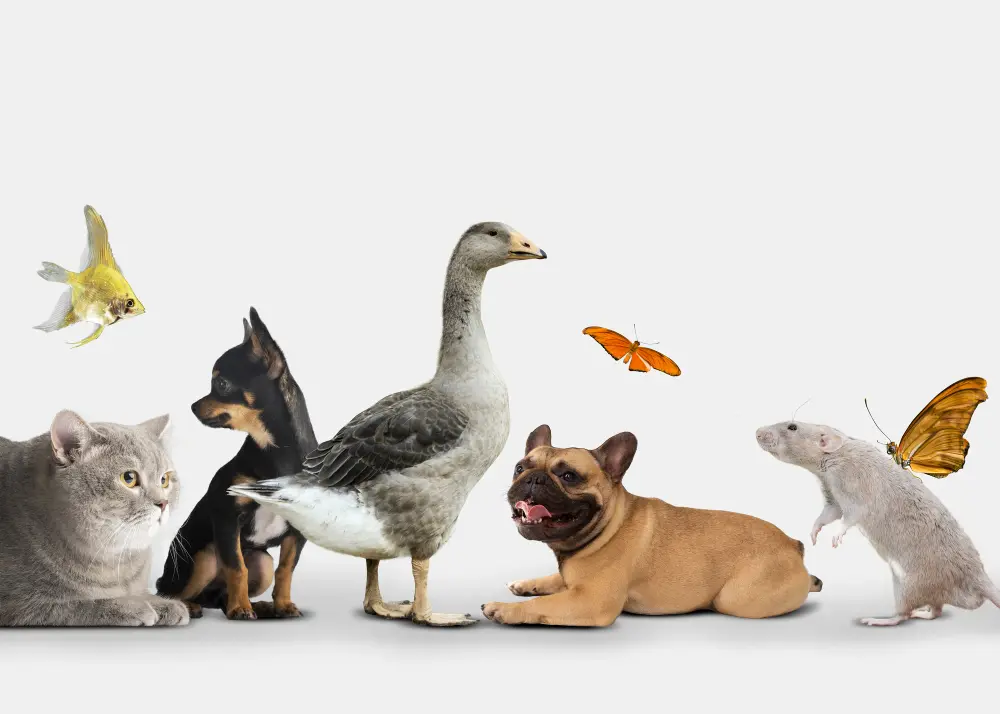
Learning animal names is essential for building your basic English vocabulary. This comprehensive list presents the most commonly used animals in daily conversations, organized by habitat and type. For child-friendly teaching approaches, check out our guide on methods to teach vocabulary to children.
Discover below a complete selection of animals in English to quickly improve your language skills:
Pets and Domestic Animals
- A bird : a feathered animal that can fly and often sings
- A cat : a small furry pet that purrs and catches mice
- A dog : a loyal four-legged companion that barks and wags its tail
- A fish : a water animal with fins and gills that swims
- A goldfish : a small orange fish often kept in bowls as a pet
- A guinea pig : a small, round rodent with soft fur, popular as a children’s pet
- A hamster : a tiny furry animal that stores food in its cheeks
- A kitten : a baby cat, small and playful
- A mouse : a small gray rodent with a long tail
- A parrot : a colorful bird that can mimic human speech
- A puppy : a young dog, energetic and adorable
- A rabbit / bunny : a soft animal with long ears that hops and eats carrots
- A snake : a long, legless reptile that slithers on the ground
- A turtle : a slow-moving reptile with a hard shell on its back
Wild Animals
- A bear : a large, powerful mammal with thick fur that hibernates in winter
- A crocodile : a dangerous reptile with sharp teeth that lives near water
- An elephant : the largest land animal with a long trunk and big ears
- A fox : a clever orange mammal with a bushy tail
- A giraffe : the tallest animal with an extremely long neck and spots
- A kangaroo : an Australian animal that jumps and carries babies in a pouch
- A lion : the “king of the jungle,” a powerful cat with a mane
- A monkey : a playful primate that swings from trees and eats bananas
- A panda : a black and white bear that eats bamboo
- A tiger : a large orange cat with black stripes, very fierce
- A wolf : a wild dog that howls and lives in packs
- A zebra : a horse-like animal with black and white stripes
Marine and Aquatic Animals
- A crab : a sea creature with claws and a hard shell that walks sideways
- A dolphin : an intelligent marine mammal that jumps out of water
- An eel : a long, snake-like fish that lives in water
- A jellyfish : a transparent sea creature that can sting
- A lobster : a large sea animal with claws, often red when cooked
- An octopus : a sea creature with eight arms and tentacles
- A seal : a marine mammal that barks and slides on ice
- A shark : a dangerous fish with sharp teeth that hunts in the ocean
- A shrimp : a small curved shellfish, pink when cooked
- A starfish : a star-shaped sea creature with five arms
- A turtle : a sea reptile with flippers and a hard shell
- A whale : the largest marine animal that breathes air and sings
Birds
- An eagle : a powerful bird of prey with excellent eyesight
- A falcon : a fast hunting bird used in falconry
- A flamingo : a pink bird with long legs that stands on one foot
- A hummingbird : a tiny bird that hovers and beats its wings very fast
- An owl : a nocturnal bird with big eyes that hoots at night
- A peacock : a beautiful bird with colorful tail feathers that fan out
- A penguin : a black and white bird that cannot fly but swims excellently
- A pigeon : a common gray bird found in cities
- A robin : a small bird with a red breast, sign of spring
- A seagull : a white coastal bird that scavenges for food
- A sparrow : a small brown bird very common in gardens
- A swan : an elegant white bird with a long curved neck
Farm Animals
- A chicken : a farm bird that lays eggs and clucks
- A cock / rooster : a male chicken that crows at dawn
- A cow : a large farm animal that gives milk and says “moo”
- A donkey : a gray animal similar to a horse but smaller, with long ears
- A duck : a water bird with webbed feet that quacks
- A goat : a farm animal with horns that eats almost anything
- A goose : a large white bird similar to a duck that honks
- A horse : a large animal people ride, with a mane and tail
- A lamb : a baby sheep, soft and woolly
- A pig : a pink farm animal that rolls in mud and says “oink”
- A pony : a small horse, perfect size for children to ride
- A sheep : a woolly farm animal that provides wool and says “baa”
- A turkey : a large bird with a fan tail, traditional Thanksgiving meal
Insects
- An ant : a tiny insect that works in colonies and lifts heavy objects
- A bee : a flying insect that makes honey and can sting
- A beetle : a hard-shelled insect, often black or brown
- A butterfly : a beautiful insect with colorful wings that starts as a caterpillar
- A caterpillar : a worm-like creature that becomes a butterfly
- A dragonfly : a flying insect with transparent wings found near water
- A fly : a small annoying insect that buzzes around food
- A grasshopper : a green jumping insect that makes chirping sounds
- A hornet : a large wasp with a painful sting
- A ladybird (UK) / ladybug (US) : a small red insect with black spots, considered lucky
- A mosquito : a tiny flying insect that bites and causes itchy bumps
- A moth : a night butterfly attracted to lights
- A snail : a slow creature that carries its shell-house on its back
- A spider : an eight-legged creature that weaves webs to catch prey
- A wasp : a yellow and black striped insect that can sting multiple times
- A worm : a long, soft creature that lives in soil and helps plants grow
Animal Idioms and Expressions
Animals are everywhere in English expressions. These figurative phrases use animal behaviors to illustrate human situations. Here are the most useful ones to know:
« To let the cat out of the bag » : to accidentally reveal a secret.
« To work like a dog » : to work extremely hard and tirelessly.
« It’s raining cats and dogs » : it’s raining very heavily.
« To take the bull by the horns » : to face a challenge directly and courageously.
« Barking up the wrong tree » : to look for something in the wrong place.
« To have butterflies in one’s stomach » : to feel nervous or anxious.
« To kill two birds with one stone » : to achieve two goals with one action.
« Like a cat on a hot tin roof » : to be extremely restless or agitated.
« To be the black sheep of the family » : to be the troublesome member of a group.
« To play cat and mouse » : to alternate between pursuing and evading.
« To throw a cat among the pigeons » : to cause sudden chaos or confusion.
« A hornet’s nest » : a dangerous situation that should be avoided.
There you have it, you now have all the tools to enrich your animal vocabulary and impress those around you in your next conversations!