Conjugation
The Present Perfect in English: Usage Rules and Exercises
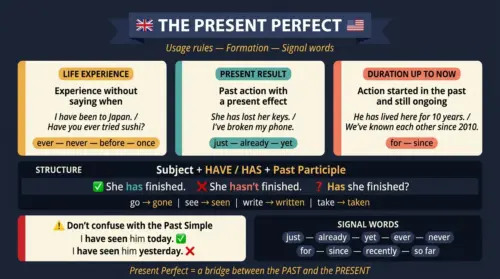
In short Construction: The tense is formed with the auxiliary verb have followed by the past participle of the verb. Golden rule: The past action

About Break Into English
Break Into English is an online language academy specialising in one-to-one English lessons with native teachers. Our method is based on active conversation and personalised content tailored to your goals.
We believe the fastest way to real fluency is speaking from day one with a native teacher who adapts to you, not the other way around.
Our individual online English courses
All our online English courses are taught by native English speakers who have been internally trained to apply the Break Into English method.
Personalised lessons are delivered online and you can choose the video conferencing platform that suits you best: Zoom, Google Meet, Teams, etc.


In short Construction: The tense is formed with the auxiliary verb have followed by the past participle of the verb. Golden rule: The past action
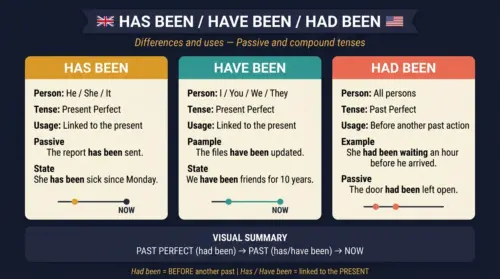
At a glance Have been: Used in the present with the subjects I, you, we, they. Has been: Used in the present only with he,
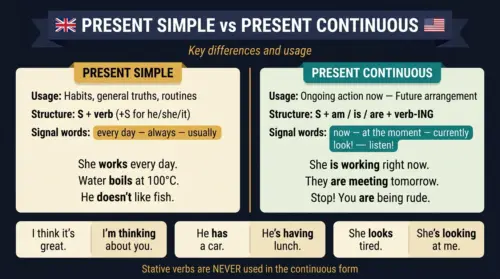
In short Present simple: It describes habits, routines, and permanent general truths. Present continuous: It describes actions happening right now at the exact moment of
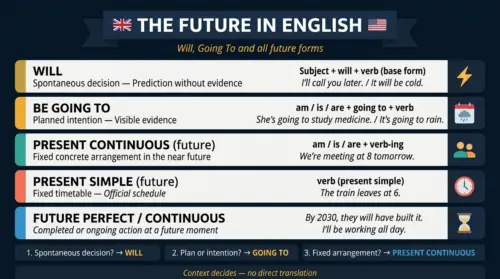
In short Will: Used for spontaneous decisions and promises. Be going to: Indicates a thoughtful intention or an already planned schedule. Present continuous: Used to
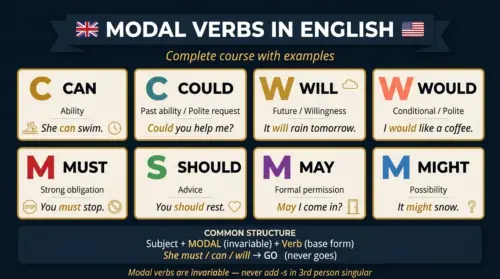
In short A unique form: English modal verbs never take an s in the third person singular. No to: A modal verb is always followed
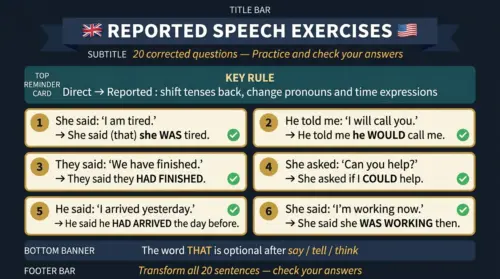
These reported speech exercises with answers accompany the complete lesson on reported speech in English. Each series targets a specific grammatical point: backshift, questions, orders,
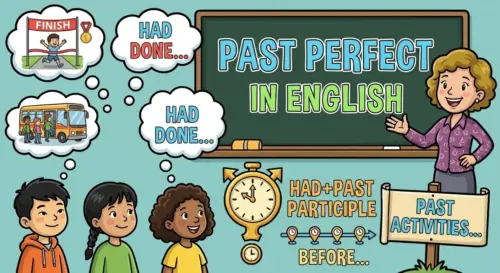
Summary Structure: Subject + had + past participle. Main usage: To indicate an action that occurred before another past action. Time markers: Already, just, never,